

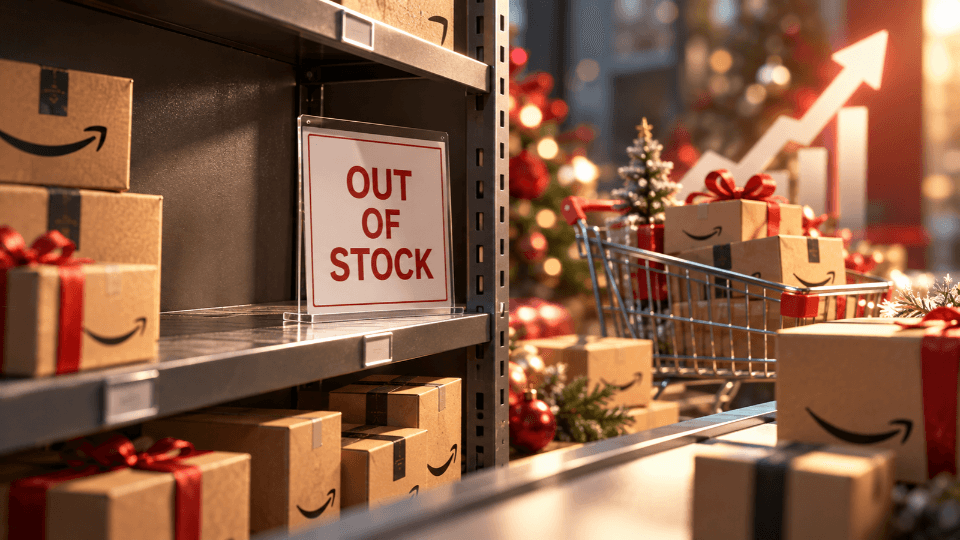
Amazon PPC Campaigns, The holiday shopping season can bring a surge in traffic and sales for Amazon sellers. With Black Friday, Cyber Monday, and Christmas approaching, many brands are preparing to increase advertising budgets to capture more shoppers.
But there is one problem that can undermine even a well-performing campaign: running out of inventory when demand is at its highest.
When a product goes out of stock, sellers can lose sales opportunities just as shoppers are actively looking to buy. Campaigns may stop serving for unavailable products, advertising momentum can be disrupted, and competitors may have an opportunity to capture shoppers who would otherwise have purchased from your brand.
That is why inventory planning should be part of your Amazon PPC strategy, not a separate task handled only by your operations team.
Why Stockouts Can Disrupt Your Amazon PPC Performance
Imagine that one of your products is performing exceptionally well during Black Friday week. Your ads are generating clicks, conversions are increasing, and your campaign is producing promising results.
Then your remaining inventory runs out before your next shipment becomes available.
Your immediate advertising spend on unavailable products may stop as Amazon’s ad-serving safeguards take effect, depending on the campaign type and product availability. However, the larger problem remains: you can no longer fulfill demand for that product while it is unavailable.
You may also lose valuable sales opportunities during a period when shoppers are actively comparing products. Once inventory returns, you will need to reassess campaign performance, competition, and demand rather than assuming everything will immediately return to its previous level.
The lesson is simple: a campaign can perform well and still create a problem if inventory cannot keep up.
1. Forecast Inventory Before Increasing Your Ad Budget
Before increasing bids or daily budgets for the holiday rush, review how much sellable inventory you have and how quickly it is moving.
Start with three questions:
- How many units are currently available to sell?
- What is the recent daily sales rate, including sales generated by advertising?
- When is the next replenishment expected to become available?
For a simple starting estimate, divide your available inventory by your expected daily unit sales.
For example, if you have 600 units available and expect to sell 40 units per day, you have approximately 15 days of inventory coverage.
This is only a planning estimate. Actual demand may rise during promotional events, and inbound shipments can face delays. Build in a reasonable buffer based on supplier lead times, fulfillment requirements, and the uncertainty of holiday demand.
Amazon’s 2026 Q4 Peak Readiness Playbook provides additional guidance on holiday inventory planning, shipment timing, and fulfillment capacity.
2. Prioritize Advertising for Products That Can Support Demand
Not every product should receive the same advertising budget during peak season.
A product with strong conversion performance may deserve more investment, but only if its remaining inventory can support the additional sales.
Before scaling a campaign, evaluate:
- Inventory coverage: Can the product remain available throughout the expected demand period?
- Profitability: Will additional sales contribute enough margin to justify the advertising expense?
- Conversion performance: Are shoppers purchasing after clicking the ads?
- Replenishment timing: Will new inventory arrive and become sellable before current stock runs out?
If a product has limited inventory and a long replenishment lead time, increasing its advertising budget may accelerate the stockout rather than improve the overall outcome.
In that situation, consider reducing bids or budgets on lower-priority targets and directing available spend toward other in-stock products with sufficient inventory and promising performance.
3. Adjust Campaigns Before Inventory Reaches Zero
Waiting until a product is completely out of stock leaves fewer options for managing demand.
Monitor inventory alongside advertising performance throughout November and December. If a product is selling faster than forecast, reassess its advertising investment before availability becomes critical.
Depending on the situation, you might:
- Reduce bids on less profitable search terms.
- Limit spending on campaigns that are not essential to your immediate sales goals.
- Preserve investment in high-priority products with sufficient stock.
- Shift budget toward other products that can fulfill additional orders.
- Coordinate advertising changes with the team responsible for replenishment.
These decisions should reflect the product’s inventory position and business priorities, rather than applying the same bid reduction or budget cut to every campaign.
The goal is not necessarily to stop advertising whenever stock becomes limited. It is to manage demand deliberately while protecting the opportunities that matter most to your business.
4. Prepare a Recovery Plan for When Inventory Returns
Sometimes stockouts are unavoidable. Supplier delays, unexpected demand, or fulfillment issues can disrupt even careful planning.
If a product becomes unavailable, confirm its current listing and inventory status, review the affected campaigns, and reassess the expected timing of replenishment.
Once inventory is available again, verify that the listing is eligible to sell and advertise before making major campaign changes. Restart or adjust campaigns according to current performance, available stock, and competitive conditions.
Avoid automatically restoring every previous bid and budget to its former level. Demand may have changed, and the campaign’s next steps should be guided by current data.
A recovery plan helps sellers respond systematically instead of making rushed decisions during an already busy season.
5. Connect Inventory Monitoring With PPC Management
Inventory and advertising decisions are closely connected. Yet when different teams manage them separately, an advertising campaign may continue scaling even as inventory becomes constrained.
A more coordinated approach brings together inventory forecasts, sales trends, campaign performance, and replenishment timelines.
Automation can help monitor campaign activity, process performance data, and identify changes that need attention. Experienced human PPC managers can then interpret those signals in context and determine whether bids, budgets, targeting, or product priorities should change.
At PPC Center, automation works alongside real human PPC managers who monitor performance, interpret campaign data, and guide optimization decisions based on each seller’s goals. This combination supports more informed advertising decisions, especially when holiday demand and inventory conditions change quickly.
Final Thoughts
Black Friday, Cyber Monday, and the Christmas shopping season offer valuable opportunities for Amazon sellers, but increased demand only helps when products remain available to sell.
Before scaling your holiday campaigns, review inventory coverage, estimate demand, account for replenishment timelines, and establish a plan for adjusting advertising when stock becomes limited.
A successful holiday PPC strategy is not just about generating more traffic. It is about making sure your business can fulfill the demand that traffic creates.
Prepare your inventory and advertising strategy together, and you will be better positioned to make the most of the holiday season.
Ready to make smarter Amazon PPC decisions this holiday season?
Don’t let inventory challenges and changing demand catch your campaigns off guard. PPC Center combines powerful automation with experienced human PPC managers who monitor campaign performance, uncover opportunities, and guide strategic optimizations to help you make the most of your advertising budget. Discover how PPC Center can support your Amazon advertising strategy at ppccenter.com.