

Amazon Sponsored Brands Shouldn’t Be Judged Like Sponsored Products, A common way to evaluate Amazon advertising is to look at the numbers that are easiest to understand:
Spend. Sales. ACoS. ROAS.
These metrics matter.
But when you’re running Sponsored Brands, looking at them exactly the same way you evaluate Sponsored Products can leave out an important part of the picture.
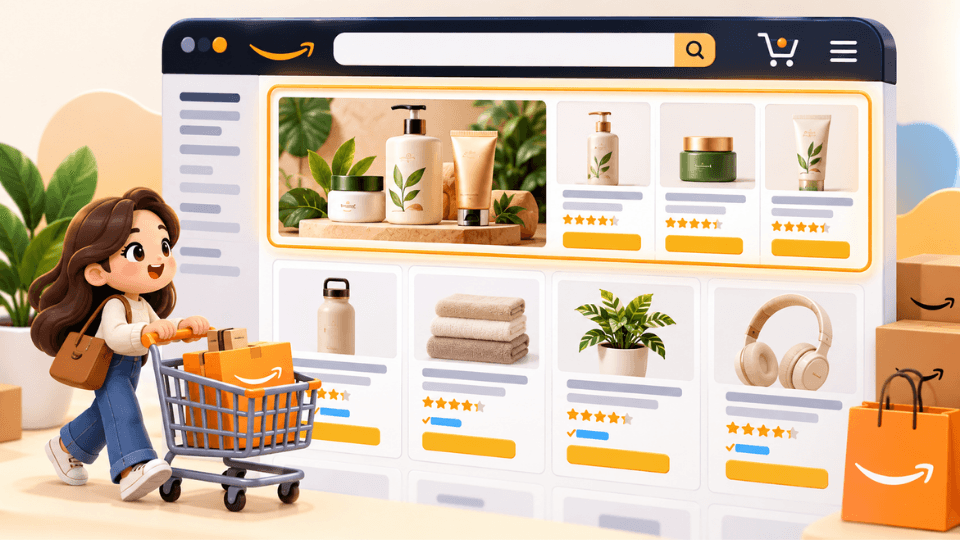
Sponsored Products are heavily focused on promoting individual products. Sponsored Brands can do something broader by putting the brand itself in front of shoppers and helping them discover multiple products.
That difference changes how you should think about performance.
Sponsored Brands Have a Bigger Job
A Sponsored Products campaign might have a relatively straightforward objective:
Get this product in front of a shopper and generate a sale.
Sponsored Brands can have a different objective:
Get the brand noticed, introduce products, and bring shoppers further into the brand.
That doesn’t mean Sponsored Brands shouldn’t generate sales. They absolutely can.
It means the value of the campaign isn’t necessarily captured by looking at one immediate conversion.
A shopper may see your brand, click the ad, explore your Store, discover another product, and eventually become a customer.
If you’re only asking whether the original click immediately produced a sale, you’re looking at only one part of that journey.
A Higher ACoS Doesn’t Automatically Mean a Worse Campaign
This is where sellers can get into trouble.
Suppose you have two campaigns:
Sponsored Products: 25% ACoS
Sponsored Brands: 40% ACoS
It’s tempting to conclude that Sponsored Products is performing better immediately.
But what if the Sponsored Brands campaign is bringing in significantly more first-time customers, introducing shoppers to several products, and generating strong engagement with your Brand Store?
The two campaigns may simply be doing different jobs.
Amazon provides new-to-brand metrics for Sponsored Brands that help advertisers understand purchases from customers who hadn’t purchased from the brand previously.
That gives sellers another way to understand what their Sponsored Brands campaigns are accomplishing.
The question becomes:
Are you measuring the campaign against what you actually want it to accomplish?
Look Beyond the Immediate Sale
Sponsored Brands can provide signals that aren’t captured by a simple sales figure.
Consider metrics such as:
Impressions
How often is your brand appearing in front of shoppers?
If your objective includes brand visibility, impressions provide useful context.
Click-through rate
Are shoppers responding to the creative and message?
A strong impression count with weak engagement may suggest that the targeting, headline, imagery, or product selection needs attention.
New-to-brand customers
Are you reaching shoppers who haven’t purchased from your brand before?
This can be particularly useful when customer acquisition is part of the campaign’s objective.
Store engagement
If you’re directing traffic to your Brand Store, consider whether shoppers are actually exploring what you’ve built for them.
These metrics shouldn’t replace sales and efficiency metrics.
They add context to them.
Your Campaign Objective Should Come Before Your KPI
Before launching or evaluating a Sponsored Brands campaign, ask:
What am I trying to accomplish?
If the answer is:
“I need to sell this specific product profitably,”
then immediate sales efficiency may deserve significant weight.
But if the answer is:
“I want more shoppers to discover my brand,”
you’ll need to look at visibility and engagement too.
And if the goal is:
“I want to acquire more customers who haven’t purchased from my brand,”
new-to-brand performance becomes much more relevant.
The mistake is not using ACoS.
The mistake is using ACoS as the answer to every question.
The Creative Matters More Than Sellers Sometimes Realize
Sponsored Brands also give sellers more creative space than a standard individual-product ad.
Depending on the format, Sponsored Brands can incorporate elements such as a brand logo, headline, product selection, lifestyle imagery, or video.
That means performance isn’t only about the targeting.
The creative itself can influence whether shoppers notice the brand and decide to explore it.
If impressions are strong but clicks are weak, the problem may not be your bid. It could be the message.
A campaign can reach the right shoppers and still fail to make a compelling reason for them to click.
Don’t Put Your Entire Product Catalog Into One Ad
Because Sponsored Brands can feature multiple products, sellers sometimes try to showcase as much as possible.
More products don’t necessarily mean more effective advertising.
The products featured together should make sense.
Think about what the shopper is searching for and whether the products tell a coherent story.
For example, if your brand sells kitchen products, an ad featuring complementary cooking products may make more sense than combining unrelated items simply because they’re all best sellers.
The goal isn’t to show everything you sell.
It’s to give the shopper a reason to explore more of what you sell.
Sponsored Brands Should Work With Sponsored Products
This doesn’t have to be an either-or decision.
Sponsored Products and Sponsored Brands can play different roles within the same advertising strategy.
Sponsored Products can help capture demand around individual products.
Sponsored Brands can help shoppers recognize and explore the brand behind those products.
Think of it as two different layers:
Sponsored Products:
“This product matches what you’re looking for.”
Sponsored Brands:
“Here’s the brand and the range of products behind it.”
When those roles are clear, your campaigns can work together rather than competing for the same objective.
The Real Question to Ask
Instead of asking:
“Does my Sponsored Brands campaign have a good ACoS?”
ask:
“Is this campaign accomplishing the job I created it to do?”
Then look at the metrics that help answer that question.
If you’re trying to acquire new customers, examine new-to-brand results.
If you’re trying to increase brand discovery, examine impressions and engagement.
If you’re trying to drive shoppers into your Brand Store, look at how that traffic behaves.
And, of course, continue to evaluate sales and profitability.
The numbers become much more useful when they have a purpose behind them.
Final Thought
Sponsored Brands aren’t simply Sponsored Products with a larger creative format.
They can play a different role in your Amazon advertising strategy by putting the brand itself into the shopper’s journey.
That means the definition of success can be broader than immediate sales.
Before judging your next Sponsored Brands campaign, decide what job you want it to do. Then measure whether it’s doing that job.
PPC Center helps Amazon sellers build advertising strategies around the bigger picture, using campaign data and business objectives to determine what deserves attention. Visit PPCCenter.com and make your Sponsored Brands strategy work toward more than just another ACoS number.